Posts

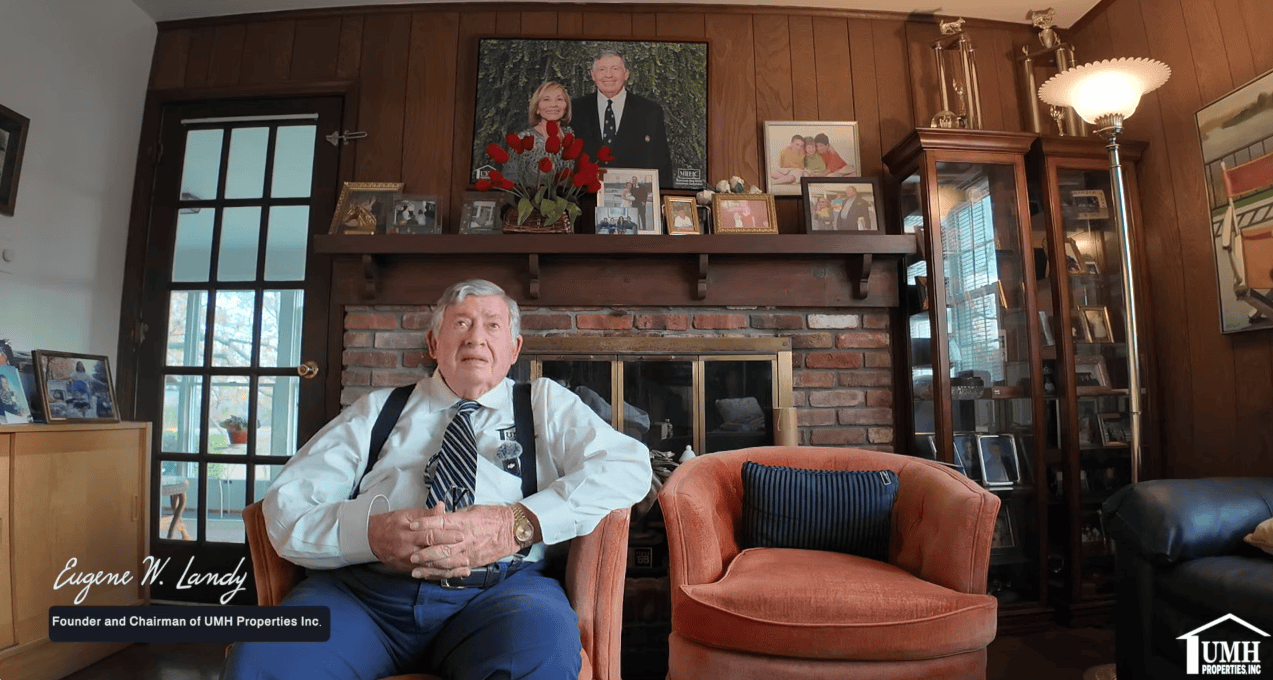
In this video from UMH Properties Inc., Eugene Landy, Founder and Chairman of UMH Properties Inc. reflects on the evolution of manufactured housing during his more than 55 years in the business.

“Today’s manufactured housing is not the manufactured housing of the past,” he said. “We’ve had enormous breakthroughs … Manufactured housing is the housing of now and the future.”

Landy noted that the original homes were not built to the HUD Code standard, and the homes today that comply with the standard are far superior, not only in appearance and quality, but also in the efficiencies that come with using a national standard: manufacturers save on economies of scale.

Landy also noted that economies of scale benefit people who live in land-lease communities as well: they experience a higher level of living at a lower cost, and access amenities such as swimming pools, clubhouses, dog parks and concierge services that they would pay much more for or not have access to if they built on their own lot.

Landy has seen problems drive innovation during his career, most recently with the development of the manufactured home duplex. Since there is a shortage of available land, putting two units instead of one on a lot provides housing for two families. The duplex reduces the cost of housing dramatically and with the square footage comparable to an apartment, but without sacrificing single-family living.

View the video here.

The National Manufactured Housing Construction and Safety Standards Act of 1974 established federal standards for the construction and safety of manufactured homes in the United States, known as the “HUD Code.” When the first version of the HUD Code was implemented in 1976, it marked the beginning of a new era for manufactured housing. As we celebrate 50 years of progress, we’ll explore insights from industry veterans on the advancements that have shaped the industry and their outlook for the next 50 years. To share your story, email mhigov@mfghome.org.

Keep Exploring

Related Posts

May 29, 2026

June is National Homeownership Month

In 2002, Representative Gary Miller (CA-41) introduced a bill in Congress to recognize June as National Homeownership Month in recognition of the importance of homeownership in building strong communities and families in the United States. MHI CEO Dr. Lesli Gooch served as Senior Policy Advisor and Legislative Director for Rep. Miller and led the roll out and subsequent celebrations for National Homeownership Month.

May 28, 2026

Award-Winning Design: Cavco’s Luxus Raises the Standard

The Luxus by Cavco Industries earned top honors at the 2026 MHI Excellence in Manufactured Housing Awards, winning the Modular Housing Design Award for its bold reimagining of factory-built living.

May 15, 2026

Boost Visibility and Industry Leadership with MHI Sponsorship

The Manufactured Housing Institute invites industry partners to explore sponsorship opportunities that elevate visibility and engagement across key audiences.

May 29, 2026

June is National Homeownership Month

In 2002, Representative Gary Miller (CA-41) introduced a bill in Congress to recognize June as National Homeownership Month in recognition of the importance of homeownership in building strong communities and families in the United States. MHI CEO Dr. Lesli Gooch served as Senior Policy Advisor and Legislative Director for Rep. Miller and led the roll out and subsequent celebrations for National Homeownership Month.

CTA Update: What It Means for Manufactured Housing

The Corporate Transparency Act (CTA) remains in effect—but its requirements are currently on hold for most U.S. businesses. In 2025, Treasury suspended enforcement and issued an interim rule exempting U.S. companies from beneficial ownership reporting, leaving only certain foreign entities subject to the law.

HUD Signals Shift on Animal Accommodation Policies

HUD has issued a new enforcement memo that signals a significant shift in how animal-related accommodations will be handled by HUD. Effective immediately, HUD will pursue enforcement actions only in cases involving trained service animals, aligning more closely with the Americans with Disabilities Act (ADA).